Understanding the Differences: Screen Printing vs. Direct-to-Garment (DTG) Explained
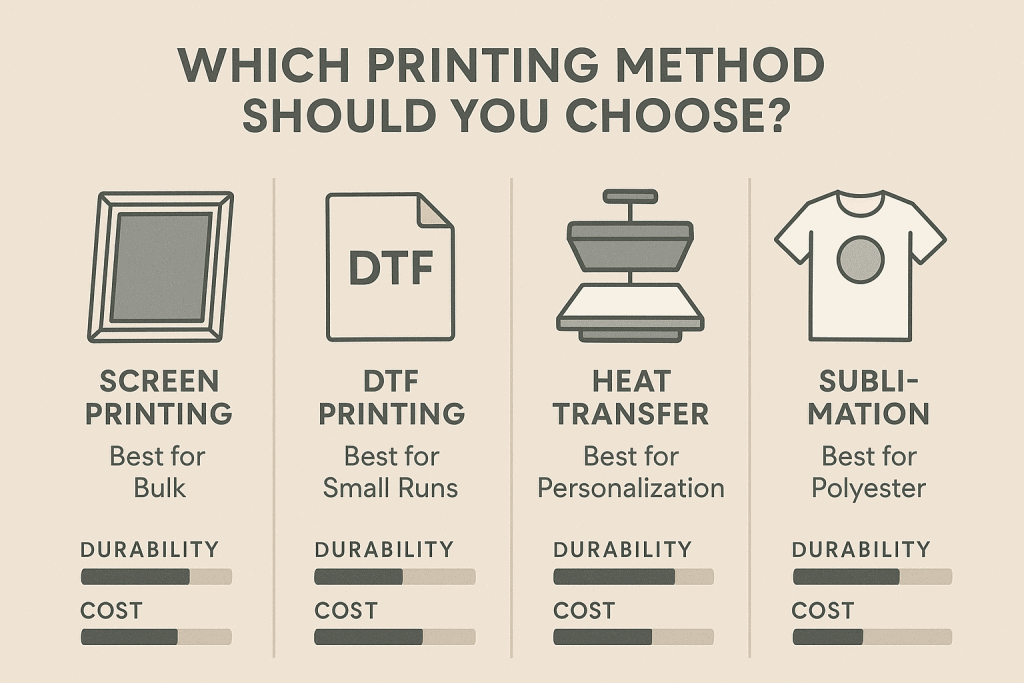
Screen printing and Direct-to-Garment (DTG) printing are two popular methods for printing designs on apparel, each with its own unique advantages and drawbacks. Screen printing involves creating a stencil (or screen) for each color in the design, allowing for vibrant and durable prints, particularly suited for larger runs. This method is ideal for simple designs with few colors and when bulk printing is necessary, as it can significantly reduce costs per unit. However, the initial setup can be time-consuming and labor-intensive, making it less suitable for small orders or intricate designs.
On the other hand, Direct-to-Garment (DTG) printing uses specialized inkjet technology to print directly onto the fabric, which allows for more complex images and a wider range of colors. This method is particularly advantageous for small runs or one-off designs due to minimal setup requirements. However, while DTG provides high-resolution prints, the durability and vibrancy may not match that of screen printing when it comes to larger quantities or exposure to repeated washing. Ultimately, the choice between these two methods will depend on factors such as order size, design complexity, and desired print longevity.
If you're a fan of the series, check out the latest merchandise at our hunter x hunter shop, where you'll find everything from apparel to collectibles. Don't miss out on unique items that celebrate your favorite characters and moments from the show!
5 Key Factors to Consider When Choosing Your T-Shirt Printing Method
When selecting a t-shirt printing method, it's essential to consider the volume of your order. Different printing techniques cater to various order sizes—some methods, like screen printing, are more cost-effective for larger runs, while techniques like direct-to-garment (DTG) printing are ideal for smaller quantities. Additionally, think about the design complexity; intricate designs may require a different approach than simpler graphics.
Another critical factor is the fabric type of the t-shirt you plan to print on. Different printing methods work best with specific materials; for instance, sublimation works excellently on polyester but may not be suitable for cotton. It's also worth considering the durability of the print; some techniques are more resistant to washing and wear, ensuring your designs stand the test of time. Lastly, evaluate your budget—some methods may have higher upfront costs but offer better quality or longevity for your investments.
Which Ink is Right for You? A Guide to T-Shirt Printing Inks
When it comes to selecting the right ink for your t-shirt printing needs, understanding the different types available is essential. Ink types can greatly affect the final look, feel, and durability of your design. Here are some of the most common inks used in the industry:
- Plastisol Ink: This is the most popular choice among screen printers due to its vibrant colors and ease of use. It sits on top of the fabric, making it ideal for bold designs.
- Water-Based Ink: Known for its softness and eco-friendliness, water-based ink absorbs into the fabric, providing a more subtle finish while being suitable for lighter fabrics.
- Discharge Ink: This ink removes the dye from the fabric, replacing it with color. It works best on darker fabrics and results in a soft, vintage feel.
- Sublimation Ink: Perfect for all-over prints on polyester fabrics, sublimation ink is transferred onto the fabric using heat, producing bright, long-lasting colors.
Choosing the right ink is not just about aesthetics; it also impacts longevity and the comfort of the t-shirt. For example, if you prefer an environmentally friendly option, you might lean towards water-based inks. However, for high-contrast designs on darker fabrics, you may opt for plastisol inks. Consider factors such as your target audience, the type of fabric, and the printing method when making your decision. Consulting with a professional printer can also guide you towards the best options for your specific project, ensuring that the final product meets your expectations and resonates with your customers.